
Unravelling the Scent of History: What Do Ancient Mummies Smell Like?
Chris T.
If you’ve ever stood next to an ancient Egyptian mummy in a museum and thought, “Okay… but what does this actually smell like?”—you’re not alone. And no, the answer isn’t “dust” or “grandma’s attic.”
Researchers have been digging into a surprisingly personal detail of the ancient world: scent. And what they found is weirdly comforting. Ancient mummies, it turns out, can give off notes that are described more like a perfume profile than a horror-movie prop.
A whiff from the past (yes, scent matters in history)
We obsess over ancient visuals—gold masks, carvings, hieroglyphs, dramatic tomb art—but smell is part of the story too. It’s just harder to preserve, measure, and talk about without sounding like you’ve lost it.
Still, scent is tied to memory in a way almost nothing else is. One smell can pull you straight into a moment, even if it happened years ago. That’s not just a fun fact—there’s real neuroscience behind it. The American Psychological Association explains how scent and memory are linked in a way that feels almost unfairly powerful.
Key insight
The “mummy smell” story isn’t just a gimmick. If you can recreate ancient scents accurately, you’re not only learning what materials were used—you’re getting closer to how ancient spaces may have actually felt to the people living in them.
So… what do ancient mummies smell like?
According to research discussed by the University of York (and published in the Journal of Archaeological Science), researchers were able to analyze and replicate the scent profile connected to Egyptian mummies. The description that keeps popping up: “resinous and earthy”.
In other words: less “rotting curse,” more “incense shop in the best possible way.”
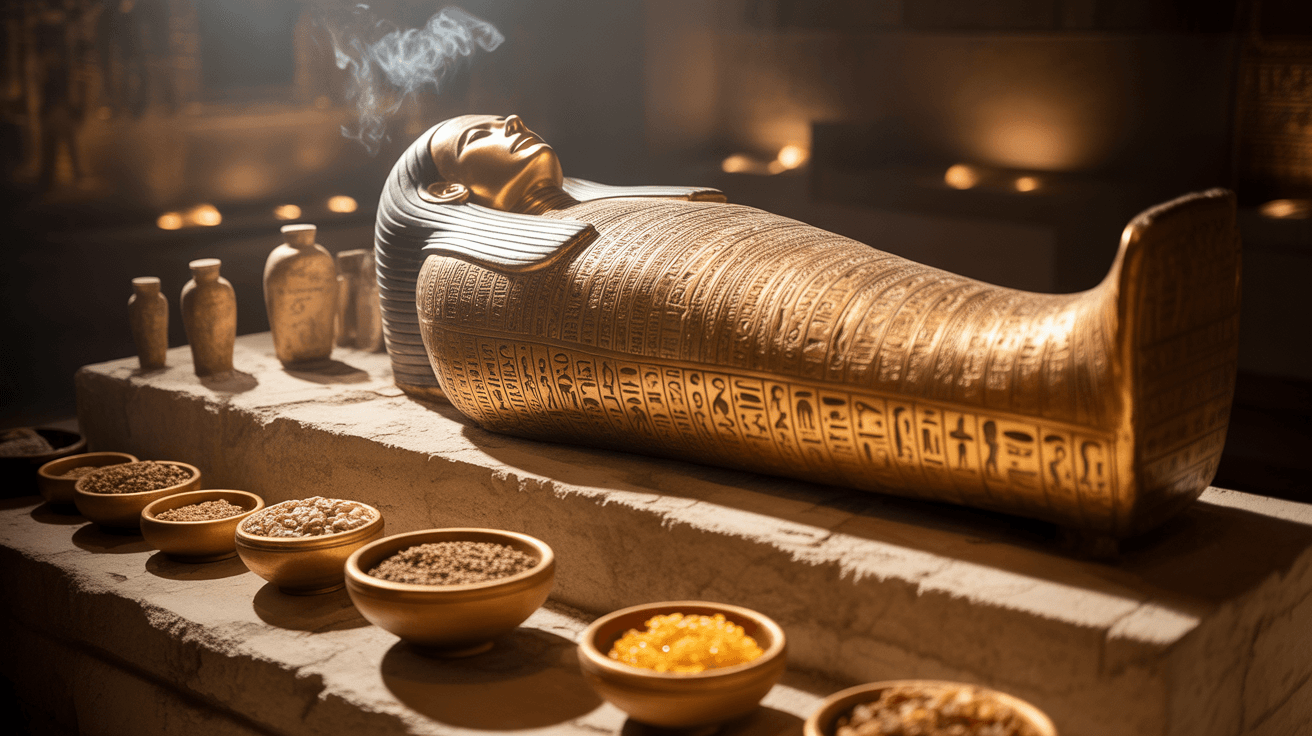
That scent comes from the materials used during mummification—basically the ancient world’s version of a preservation recipe, mixed with ritual meaning and (let’s be real) very intentional aesthetics.
The ingredients behind the smell (ancient embalming, but make it aromatic)
When you strip away the mystery and mythology, mummification involved a lot of organic substances—some practical, some symbolic, and some probably both. Here are the key players mentioned in the research:
- Beeswax (protective, sealing qualities)
- Cedar oil (aromatic and antimicrobial properties)
- Myrrh (ritual use, strong resin scent)
- Cassia (spiced aroma, used historically in perfumes and incense)
If you want to get a feel for how prized some of these resins were historically, Britannica’s overview of myrrh is a great quick read.
Why “smell archaeology” is a bigger deal than it sounds
This field has a name: olfactory archaeology. And yes, it sounds like the kind of degree your uncle would roast you for at a family dinner. But it’s actually a legit and growing area of research.
Here’s the practical part: smell can reveal things historians don’t always get from artifacts alone. It can hint at trade routes, available materials, burial practices, and even social status.
For example, if you find evidence of imported resins that don’t grow locally, you’re looking at commerce and cultural connections—not just a “nice smell.”
Where this gets even weirder (in a good way)
Once you accept that scientists can recreate the smell of mummies, it opens the door to a whole list of “I can’t believe this is real” questions.
- Could we recreate the smell of a Roman bakery at sunrise?
- What did a Mesopotamian marketplace smell like on a busy day?
- How brutal would Victorian London streets be to experience in 4D?
- Would ancient temples smell like incense… or like crowded humans?
And yes, some museums are already experimenting with smell in exhibits, because it makes history feel less like a textbook and more like a place you can step into.
My take
People always joke that museums are “boring.” Adding scent doesn’t just make it fun—it makes it human. History stops being abstract when you can literally smell the ingredients someone used 3,000 years ago.
FAQ
What does an ancient Egyptian mummy smell like?
Research suggests the scent can be described as “resinous and earthy”, linked to the organic materials used during mummification.
What materials were used in the mummification process?
Common materials mentioned include beeswax, cedar oil, myrrh, and cassia—ingredients that helped preserve bodies and carried ritual meaning.
What is olfactory archaeology?
It’s the study of scents from the past, including how smells can be analyzed and recreated to better understand historical environments and practices.
Why does scent matter in archaeology?
Smell can provide clues about trade, available resources, technology, and cultural beliefs—details that aren’t always obvious from visual artifacts alone.
Can museums actually use recreated scents in exhibits?
Yes, some museums and researchers explore scent as a tool to make exhibits more immersive and emotionally memorable.
Key Takeaways
- Ancient Egyptian mummies can have a scent described as “resinous and earthy.”
- That smell comes from organic embalming materials like myrrh, cedar oil, and beeswax.
- Olfactory archaeology is a real field that studies how the past may have smelled.
- Scent research can hint at trade routes, ritual practices, and social status.
- Smell is tightly connected to memory, which is why it can make history feel “alive.”
- Recreated scents could make museum exhibits far more immersive than text-only displays.
- This is one of the rare cases where “smell the past” is both weird and genuinely useful.
 Entertainment & Pop Culture
 The Corecore Aesthetic: Shaping a New Digital Expressive Realm
Written by: Nina P. Entertainment & Pop Culture Writer I cover entertain...
 Weird & Bizarre
 Vietnam's Innovative Response: Unveiling the COVID-19 Theme Park
Written by: Chris T. Weird & Bizarre Editor I chase the kind of stories ...