
The Corecore Aesthetic: Shaping a New Digital Expressive Realm
Nina P.
Corecore is what happens when you’ve watched so much internet content that normal videos stop working. It’s not a trend you “wear.” It’s a feeling you get hit with—usually at 1:37 a.m.—when your feed suddenly turns into a montage of modern life that feels a little too real.
If your For You Page has ever made you stare at your phone like it personally called you out, that’s the corecore effect. It’s chaotic, emotional, ironic, sincere, and slightly existential… all at the same time.
Corecore isn’t a style — it’s a mood crash
People call it an “aesthetic,” but corecore is less about visuals and more about emotional editing.
Most corecore videos are stitched together from random clips: crowds, news footage, anime moments, surveillance-style shots, old memes, luxury brands, war clips, lonely city walks, neon chaos, quiet heartbreak. Then they get layered with music or voiceovers that turn the whole thing into a digital gut punch.
Key insight
Corecore feels powerful because it mimics how our brains process the internet: fragmented, overstimulated, emotional, and full of contradictions. It’s not “random.” It’s modern life edited into a vibe.
The corecore formula (why it hits so hard)
Corecore works because it’s built like an emotional trap. The clips alone aren’t special. It’s the combination—and the timing—that makes it land.
In practice, corecore videos usually lean on three things:
- Contrast — joy next to disaster, luxury next to despair
- Recognition — moments you’ve seen before, but never framed like this
- Sound design — music that makes the montage feel like a confession
It’s basically the internet’s version of poetry—except it’s made from scraps.
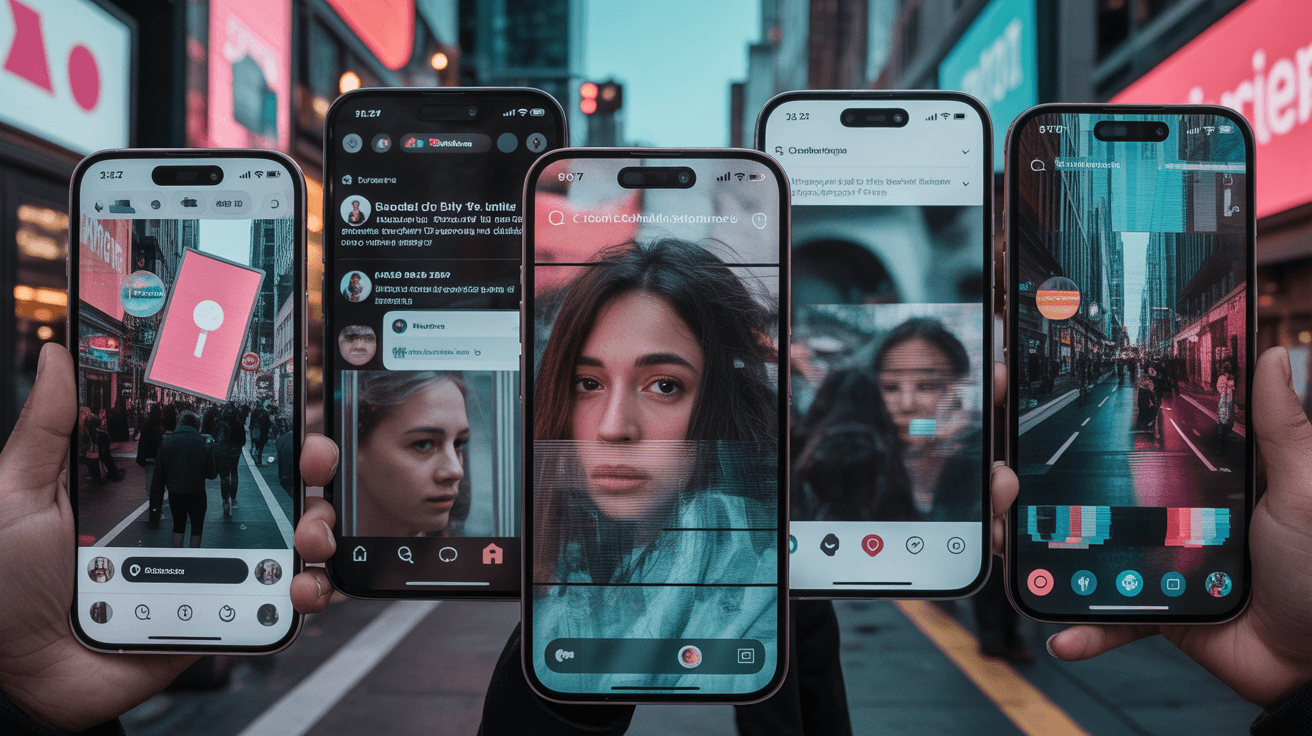
Why corecore feels “too real” for some people
Corecore videos are often described as depressing, unsettling, or weirdly comforting. That sounds like a contradiction, but it makes sense.
Some people watch corecore and feel:
- seen (like the video understood their mood)
- overwhelmed (like it pushed them into a spiral)
- numb (because it looks like the same chaos they’ve been scrolling through)
- weirdly calm (because it matches the inner noise)
And that’s why corecore doesn’t feel like a “fun trend.” It feels like a new kind of digital expression for people who are tired of pretending everything is fine online.
If you want a broader look at how social media affects teens and young adults psychologically, the American Psychological Association’s resources on social media and mental health are a solid starting point.
Corecore vs. other “-core” trends
This is where people get confused. The internet has “cottagecore,” “goblincore,” “normcore,” “weirdcore,” and about 700 more.
Corecore isn’t like that.
Most “-core” aesthetics are about building a consistent world. Corecore is about showing the world falling apart in pieces.
The simplest way to explain it
Cottagecore is an escape. Corecore is a confrontation. One says “let’s live in a fantasy,” the other says “look at the reality we’re already in.”
Why the algorithm loves corecore
Here’s the slightly dark part: corecore performs well because it keeps people watching.
It’s short, emotional, and loaded with meaning. Even if you don’t like it, you usually don’t scroll away instantly because your brain is trying to decode it.
And TikTok especially rewards content that triggers:
- rewatches (because it’s hard to process the first time)
- saves (because people want to “feel it again” later)
- comments (because everyone argues about what it means)
It’s the perfect format for a feed that rewards emotional intensity.
How to enjoy corecore without doom-spiraling
Look, I’m not going to pretend corecore is always bad. Some of it is genuinely creative, almost like a new kind of filmmaking. But if it starts messing with your mood, it helps to treat it like spicy food—small doses, not an all-day diet.
Practical ways to keep it from wrecking your night:
- Don’t watch it right before sleep (it sticks in your head)
- Balance your feed intentionally with lighter content you actually enjoy
- Notice how your body reacts (if you feel anxious, stop scrolling)
- Save the ones you like and skip the endless “same vibe” loop
FAQ
What is the corecore aesthetic?
Corecore is a TikTok-driven video style that uses emotional montages of random clips, music, and irony to express modern internet overload and existential feelings.
Why is corecore popular?
It resonates with people because it reflects how the internet feels—fragmented, intense, chaotic, and emotionally contradictory.
Is corecore supposed to be depressing?
Not always, but a lot of corecore content is heavy. Some people find it comforting, others find it overwhelming.
How is corecore different from other “-core” aesthetics?
Most “-core” trends are about building a specific world or vibe. Corecore is more about showing the emotional collision of modern reality.
Can corecore affect mental health?
It can if you binge it and it triggers anxiety or doom-spiraling. Like any intense content loop, it’s best in moderation.
Key Takeaways
- Corecore is an emotional montage style that reflects internet overload and modern anxiety.
- It hits hard because it mixes contrast, recognition, and powerful sound design.
- Unlike other “-core” aesthetics, corecore is more confrontation than escape.
- The format performs well because it triggers rewatches, saves, and comments.
- Corecore can be creative, but binge-watching it can drag your mood down fast.
- Balancing your feed and watching in moderation keeps it from turning into a doom spiral.
 Social Media Buzz
 Instagram Introduces Translation for 99 Languages and Many Other Innovations
Written by: Zoe M. Social Media Correspondent I follow the stories that ...
 Weird & Bizarre
 The Unusual Collapse of New York's Legendary Wine Emporium, Sherry-Lehmann
Written by: Chris T. Weird & Bizarre Editor I chase the kind of stories ...