
Elon Musk and Mark Zuckerberg's Influence Driving Users Away from Major Platforms: An In-Depth Analysis
Tyler B.
Elon Musk and Mark Zuckerberg aren’t just tech CEOs anymore. They’re basically characters—two human brands who can shift headlines, politics, and public mood with a single post.
And whether you love them, hate them, or are just tired of hearing their names, the truth is simple: they’ve both built influence that goes way beyond what most billionaires ever manage.
They don’t just own platforms — they set the temperature
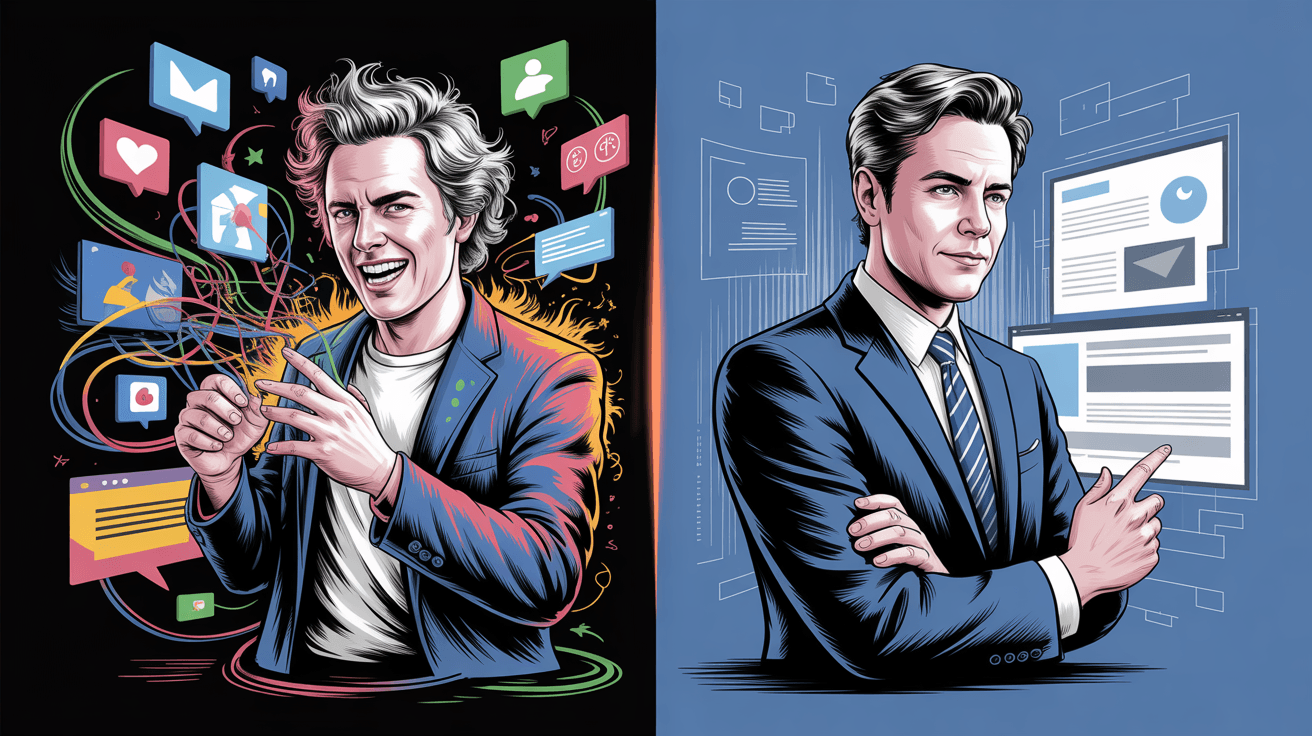
Musk and Zuckerberg influence culture in different ways, but the effect is similar: they shape what people argue about, what gets amplified, and what feels “important” online.
One of them does it through constant attention-grabbing commentary. The other does it through quiet platform control (and the fact that billions of people use Meta apps without thinking about it).
Key insight
Their biggest power isn’t wealth—it’s attention control. Musk moves people through personality. Zuckerberg moves people through infrastructure. Either way, the public gets pulled into their gravity.
Musk’s influence is loud, personal, and chaotic on purpose
Elon Musk’s influence comes from something most CEOs avoid: he performs in public constantly.
He posts like a guy with too much caffeine and a Wi-Fi connection, mixing memes, politics, business, tech predictions, and personal jabs. It makes him feel “closer” to regular users, even though he’s operating on a completely different level of power.
And because he owns X (formerly Twitter), the platform becomes part megaphone, part stage, part feedback loop.
That style creates two outcomes at once:
- His fans treat him like a genius outsider who “tells it like it is.”
- His critics treat him like a chaos engine who can’t stop escalating.
Both reactions still feed the same machine: more visibility, more engagement, more influence.
Zuckerberg’s influence is quieter — and that’s the point
Zuckerberg doesn’t usually move through personality the way Musk does. He moves through reach.
Meta platforms (Facebook, Instagram, WhatsApp) don’t just host culture—they distribute it. And whoever controls distribution controls a lot of what ends up feeling mainstream.
That’s why Zuckerberg’s influence looks “boring” until you zoom out and realize how much of the world communicates through Meta-owned apps every day.
If you want a research-driven look at how online platforms shape public behavior and communication, Pew Research Center’s internet research is one of the best resources without the noise.
The “infrastructure” advantage
You can ignore Zuckerberg’s personality. You can’t ignore Meta’s footprint. When most of your group chats, business pages, and social habits run through one ecosystem, the influence becomes automatic.
Why people compare them so much
On the surface, it’s an easy comparison: two billionaire tech founders, both with huge platforms, both obsessed with scale.
But the reason people really keep pairing them up is because they represent two different versions of modern power:
1) The celebrity CEO: influence through public performance, drama, and cult-like fandom energy.
2) The platform emperor: influence through ownership of the pipes everyone uses.
And yes, that’s why the internet was weirdly obsessed with the idea of them fighting in a cage match. It wasn’t just “haha rich guys.” It was two power types turned into entertainment.
The practical part: how to read their influence without getting played
If you want to stay sane while these two dominate headlines, here are a few ways to watch the story smarter:
- Separate posts from policy. A viral tweet isn’t the same as a real company decision.
- Watch incentives. Attention, stock pressure, and brand control drive behavior more than “opinions.”
- Don’t confuse visibility with truth. The loudest take often wins the feed, not the best one.
- Follow the systems. Ownership and platform rules shape the internet more than one personality moment.
And if you’re trying to understand why online outrage turns into real-world pressure so quickly, I always recommend reading up on how influence spreads through networks. The Britannica overview of social network analysis is a surprisingly approachable starting point.
So who has more influence?
Honestly, it depends on the arena.
Musk wins the attention game because he’s the headline. Zuckerberg wins the infrastructure game because he owns the pipes.
If you’re asking who shapes daily life more, it’s probably Zuckerberg—because Meta is woven into everyday communication. If you’re asking who can hijack the news cycle with one post, it’s Musk.
Either way, both prove the same thing: in 2025, influence isn’t just fame—it’s the ability to steer what millions of people talk about next.
FAQ
Why are Elon Musk and Mark Zuckerberg so influential?
Because they don’t just run companies—they control platforms and attention systems that shape what people see, share, and argue about online.
How is Musk’s influence different from Zuckerberg’s?
Musk drives influence through constant public posting and cultural performance, while Zuckerberg’s influence comes from Meta’s massive reach and infrastructure.
Does owning a social media platform increase influence?
Yes. Platform ownership affects visibility, distribution, rules, and how conversations spread—often more than people realize in the moment.
Are they considered celebrities now?
In many ways, yes. They function like celebrity figures because people follow their personalities, drama, and public narratives—not only their products.
How can users avoid getting manipulated by billionaire influence online?
By separating viral moments from real policy decisions, watching incentives, and remembering that algorithmic visibility isn’t the same as truth.
Key Takeaways
- Musk and Zuckerberg shape culture through attention and platform control.
- Musk dominates headlines through personality-driven chaos and posting.
- Zuckerberg’s power comes from Meta’s massive global infrastructure.
- Their influence is bigger than business—it affects politics, trends, and public mood.
- To read the story smarter, watch incentives and system-level control, not just viral posts.
- Who has “more influence” depends on whether you mean attention or infrastructure.
 Weird & Bizarre
 Explore the Majesty of the World's Longest Car: The Astounding 30-Meter Limousine
Written by: Chris T. Weird & Bizarre Editor I chase the kind of stories ...
 Entertainment & Pop Culture
 The Evolving Career and Confronting Criticisms: A Deep Dive into Malcolm Gladwell's Journey
Written by: Nina P. Entertainment & Pop Culture Writer I cover entertain...